
Found 3 results

O'Leary & Sons Cinema Advertising Slide

Before digital media came to the cinema, adverts were shown using transparent slides. Each slide was loaded into the projector for only a few seconds, otherwise the heat would cause the glass to crack. They were usually shown during the intermission, just as the audience was returning to their seats.

Because these slides were inexpensive to produce, local businesses could afford to take out advertising with a handful of local cinemas. This ad for a Foxton plumber gives a warning to those thinking of doing a bit of DIY! According to the Yellow Pages O'Leary and Sons were founded in 1956.

Cinema Advertising Slide- 'The One Stop Shop'

 Before digital media came to the cinema, adverts were shown using transparent slides. Each slide was loaded into the projector for only a few seconds, otherwise the heat would cause the glass to crack. They were usually shown during the intermission, just as the audience was returning to their seats.

Because these slides were inexpensive to produce, local businesses could afford to take out advertising with a handful of local cinemas.  Having a safari seemed a strange way to advertise a local shop- if a shopper found a live lion on Oxford Street they would have had quite a shock- but it made sense in the cinema. Action and adventure movies were popular (including the 'Tarzan' series) so this ad just added to the escapism. 

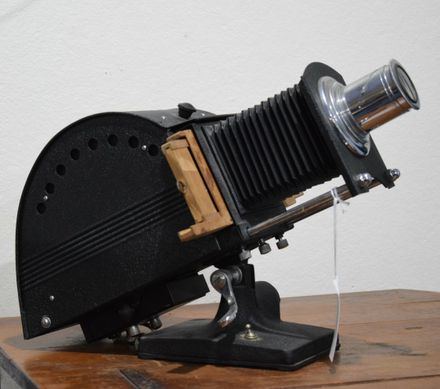
Johnson Optiscope Model 12 Lantern Projector

'Magic Lantern' slides were designed to be projected in a machine like this one. The magic lantern is an early type of optical projector and has been around in some form since the middle of the 17th century. The slides they used had drawings or (from 1849) photographs. Smaller slides became popular in the 1930s and by 1960 the magic lantern was virtually extinct. 

In Victorian times travelling lanternists would give shows in many Horowhenua towns. Sometimes they would be comical but most of the time they were educational- giving views and information about far off lands and new discoveries. By the early 20th century the lanterns were being used by schools, churches and conservation groups. Keen photographers would also make and screen lantern slides of their families.

This particular magic lantern was made in England in the late 1940s- aimed at domestic users or small classrooms and company presentations. Johnson did not design it- they bought the moulds from Ensign whose lantern factory was destroyed during the Blitz. Unlike earlier kerosene powered lanterns, the Optiscope uses a mains powered light bulb.

A range of magic lanterns are on display at Foxton's MAVtech museum of audio and visual technology.


Search settings